Nebulization therapy in children is a common way to help kids breathe easier when they have certain lung or airway problems. Many parents hear about pediatric nebulizer use or breathing treatments for kids, but may not know when or why these are needed. In this blog, you will learn what nebulization therapy is, when doctors recommend it, and how it can help your child.
What Is Nebulization Therapy?
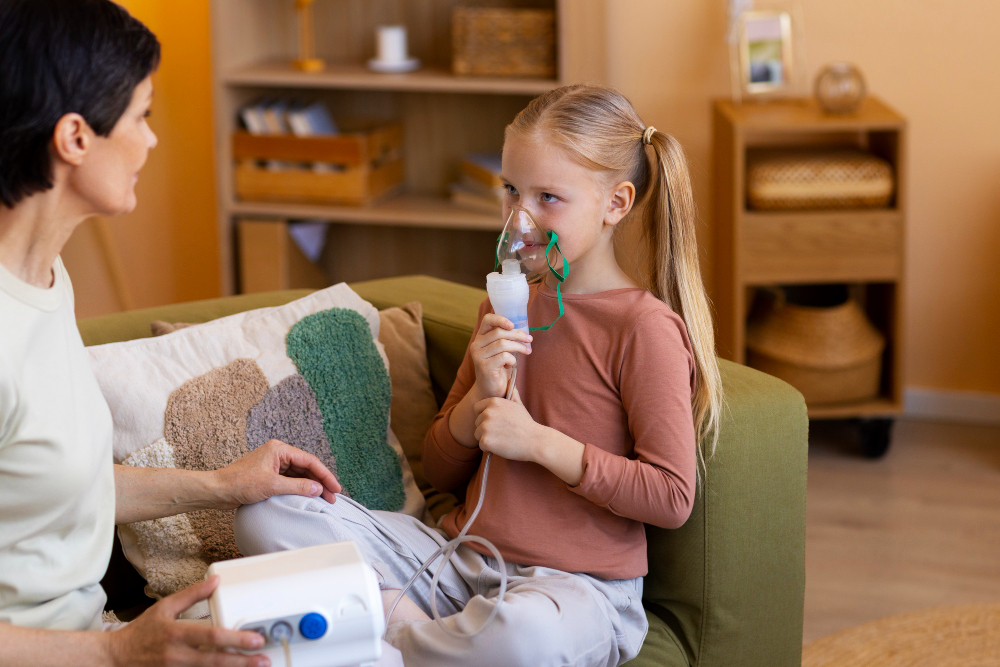
Nebulization therapy is a treatment that turns liquid medicine into a fine mist. Because of this, children can breathe the medicine directly into their lungs. Usually, a small machine called a nebulizer is used. It is often called a breathing machine for kids. The mist helps deliver medicine quickly and gently, especially for young children who may not use inhalers well.
When Is Nebulization Therapy Needed in Children?
Doctors may suggest nebulization therapy for children in several situations. For example, it is often used when a child:
Sometimes, children with chronic lung problems need regular nebulization. However, always follow your doctor’s advice before starting any breathing treatment for kids.
Why Is Nebulization Therapy Used for Kids?
Nebulization therapy is used for kids because it is gentle and easy. Unlike inhalers, nebulizers do not need strong breaths. Instead, children can breathe normally while the machine works. This makes it helpful for babies and toddlers. Also, it can deliver medicine deep into the lungs, which is important for treating asthma or other breathing problems.
How Does Nebulization Therapy Work?
First, a doctor prescribes the right medicine and dose. Next, the medicine is placed in the nebulizer cup. Then, the machine turns the liquid into a mist. Your child breathes in the mist through a mask or mouthpiece. Usually, a session lasts about 10 to 15 minutes. During this time, your child should sit calmly and breathe slowly.
Benefits and Risks of Nebulization in Children
Nebulization therapy offers many benefits for children. For instance, it:
However, there are some risks. Sometimes, children may have mild side effects, such as:
According to the CDC and pediatric journals, serious side effects are rare when used as directed. Still, always talk to your doctor if you notice anything unusual.
How to Prepare Your Child for Nebulization
Getting your child ready for nebulization can make the process smoother. Here are some tips:
Sometimes, playing gentle music or singing can help your child relax.
Tips for Safe and Effective Nebulization at Home
For safe and effective nebulization therapy at home, follow these steps:
Always keep emergency contact numbers handy, just in case.
Prevention and When to Consult a Pediatrician
While nebulization therapy helps manage symptoms, prevention is important. For example, keep your child away from smoke and dust. Encourage hand washing to prevent infections. Make sure your child gets all recommended vaccines. If your child has frequent breathing problems, talk to your pediatrician. You should also consult a doctor if:
Early medical care can prevent serious problems and keep your child healthy.
Conclusion Nebulization therapy in children can be a safe and helpful way to treat breathing problems. However, every child is different. Consult a pediatrician at Care Well Hospital for personalized advice on nebulization therapy for your child.